Russia under Putin should not rejoin the G7
The likelihood of Russia rejoining the largest club of developed democracies should be the same as its leader Vladimir Putin living to be one hundred and fifty years old.
Yet, as part of the latest round of Russia-Ukraine peace talks, a draft treaty cooked up between President Trump’s Special Envoy Steve Witkoff and interlocutors in Moscow includes provisions to allow Russia to rejoin the G7. These provisions build on President Trump calling for Russia’s return at a meeting with Putin in Anchorage and similar comments Trump made in his first-term in 2018 and 2019.
These calls came despite Russia’s interventions in the Syrian civil war to prop up dictator Bashir Al-Assad (from 2015-2024) and the poisoning of Sergei and Yulia Skripal in Sailsbury by Russian intelligence agents.
Trump is not alone in his advocacy. Since Russia’s original suspension from the G7 in 2014 for its annexation of Crimea and prior to its invasion of Ukraine, at different times the governments of Italy, Germany, and Japan have called for its reinstatement.
However, Putin’s return to the club of developed democracies would be problematic to say the least. First, and perhaps the most blindingly obvious obstacle, is that Russia is the furthest from a democracy it has been since perestroika in 1985.
When welcoming Russia as a fully-fledged member of the revised G8 in 2002, then UK Prime Minister Tony Blair said that the decision reflected “the remarkable economic and democratic transformation that has occurred in recent years, and in particular under the leadership of President Putin”.
Today, Putin’s hold on power is unquestionable. His constitutional reforms leave him as effectively a dictator for life. Russia has over 1,500 political prisoners who suffer in prison as a result of poor conditions and the denial of medical treatment, with the tragic death of Alexei Navalny the most high-profile example. Russia has imprisoned a further 15,000 Ukrainians in the occupied territories and abducted 20,000 Ukrainian children. Putin’s political opponents overseas are the subject of assassinations, including acts of terror on the streets of the UK which have killed British nationals.
Beyond its lack of democratic credentials, Russia has failed to rectify the original sin for which it was initially suspended from the G7: the seizure of Crimea from Ukraine. Current proposals for a Russia-Ukraine peace deal do not include a requirement for Russia to return Crimea, and indeed seem to involve Ukraine forfeiting further territory in the Donbas. It would be perilous for the UK and G7 partners to allow Russia to be readmitted without a just resolution to this issue, as it would be viewed as a failure by democracies to uphold previous redlines on territorial sovereignty.
Nor can the G7 turn a blind eye to the war crimes that Russia has committed in Ukraine since 2022, including the bombing of hospitals, nuclear power stations, and nurseries. Readmittance without any attempt to hold Russia to account at the International Criminal Court for these crimes would call into question the UK and other G7 partners’ commitments to international humanitarian law and corresponding multilateral institutions.
In Russia’s absence, the G7 has become a productive multilateral forum for developed democracies to coordinate their responses and pool resources to deal with shared challenges including de-risking supply chains away from China, creating an alternative development aid offering to Russia and China, and coordinating efforts to respond to transnational repression. Russia’s return would paralyse the current work of the G7, undermine these efforts, and require this grouping to meet in a different format without Russia – effectively creating an identical body to the G7 as it currently stands.
Rather than contributing to progressive cooperation within the grouping, Putin would likely use Russia’s membership to pressure other G7 partners for sanctions relief while maintaining its war-time economy and threatening European security. The UK businesses seeking to gain restitution for the appropriation of their assets would also be weakened if Russia were readmitted into the G7 before any restitution is paid.
Russian membership of the G7 was part of a post-Cold War settlement which sought to integrate autocratic states into the US-led international rules-based order but ultimately led to a delinking of free trade from democracy and human rights.
This settlement is over with the UK Government’s National Security Strategy describing “an era of radical uncertainty” where “the international order is being reshaped by an intensification of great power competition, authoritarian aggression and extremist ideologies”. In this new era, the UK Government’s Strategic Defence Review describes Russia as “an immediate and pressing threat”, which should be more than enough for UK Ministers and parliamentarians to state publicly that the rationale for it rejoining the G7 no longer exists.
After all, this is what French President Macron and German Chancellor Mertz said at the G20 recently, where they registered their opposition to Russia’s return and disclosed a broader lack of support amongst the rest of the G7 membership outside of the United States.
If there were a desire to expand the current G7, then the likes of Australia and South Korea would have a far better claim to membership as democracies with developed economies than Russia.
In the past, previous UK prime ministers have had no problem in outlining opposition to President Trump’s assertion that Russia should rejoin the G7. This time should be no different.
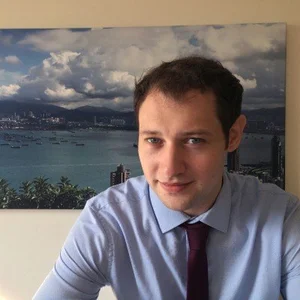
Sam Goodman is co-chair of the New Diplomacy Project.
Cover Image Courtesy of Wikimedia Commons